
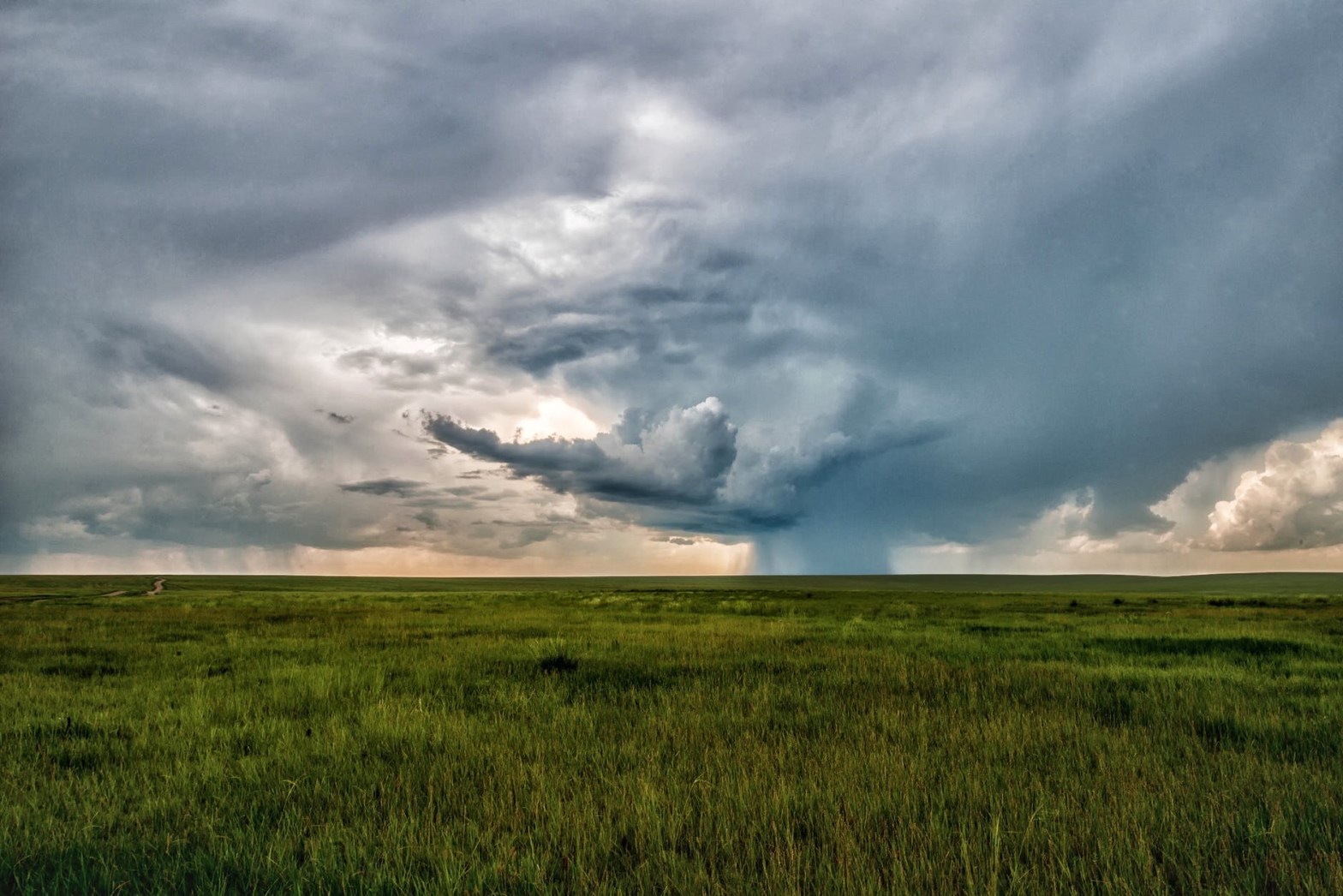
Springtime in Oklahoma means different things for several people. There are some who begin sowing their gardens. Others start gearing up for baseball, and many families are getting ready to go on vacation for Spring Break. If there’s one thing that Oklahomans as a whole community can count on for Spring it’s tornado season.
Growing up in the heart of Oklahoma my whole life, I’ve seen plenty of storm seasons. I had a close encounter as a young adult in 2013 when an EF3 tornado destroyed everything in its path just half a mile south of the house I was living in at the time. I vividly remember where I was on May 3, 1999 when Oklahoma had one of the most prolific outbreak of tornadoes in history. It can be a frightening event to go through, whether you’re a local or new to the state. However there are certain measures you can take to keep you and your family safe, and in some regards, financially secure. We are going to look at five tips to help prepare you and your family for tornado season.
What is a tornado?
Before we get into how to prepare for a tornado, let’s first look at what a tornado is. Hollywood can give us a skewed misconception of the behavior of tornadoes and how to keep yourself safe from them. Please whatever you do, do NOT hide out in an old barn tethered to a pipe (insert slapping forehead emoji)!! Tornadoes are incredibly powerful forces of nature. Even small ones can do large amounts of damage.
A tornado is the product from the collision of warm, humid air and drier, cold air. The colder air is pushed over the warm air, and the warm air rises through the cold air to cause an updraft. If the winds vary sharply in speed or direction, then a column of air that is in contact with both the Earth and storm clouds begins to spin, developing a funnel, then a tornado. Tornadoes can vary in their size, intensity, and the path which they travel. The amount of damage and wind speed of a tornado are graded on a scale known as the Enhances Fujita Scate. This scale goes from EF0-EF6, with an EF5 being the strongest recorded. An EF6 is considered an Inconceivable Tornado and their winds are very unlikely.
Tips
Implement a Safety Plan
This may seem the most obvious tip to relay, but the safety of you and your family is of the utmost importance. Having a safety plan is by far the number one preparation tool you can utilize before storm season ever gets here.
What exactly is in a safety plan?
A Tornado Safety Plan is a plan for you and your family in the event you need to take shelter because of severe weather.
When writing out your safety plan the primary goal is to know where to go when advised to take shelter. If you are blessed to have a storm cellar, shelter, or safe room at your house this is exactly what that space is intended for. Before storm season, make sure this designated area is cleaned well (you don’t want to choose between meeting Mr. Spider in close quarters vs facing a tornado head on!) and equipped with a few essentials. A battery operated radio with extra batteries, bottles of water and a few non perishables, and a flashlight are a few things to stock in there.
Another option is to utilize an extended family member or friends shelter to hunker down in, that is if they live close enough to make it to shelter in time and they have given permission to do so. Be sure to check out your community’s Facebook pages or city of commerce sites as they can lead you in the direction of a community shelter, but make sure to read thoroughly as some do not allow you to bring pets. If absolutely none of these options are available to you and you must seek immediate shelter in your house, the CDC has recommended guidelines to shelter in place properly. Go to a basement or an inside room without windows on the lowest floor of the home (usually a bathroom or closet). Avoid windows at all cost! For extra protection cover yourself with something sturdy and protect your head. And no matter what, do not stay in a mobile home!
Also, if you happen to be driving during a storm and you are in the path of a tornado, DO NOT seek shelter under an overpass. Do your best to stay at the lowest elevation as possible.
Be Weather Aware
The best way to know if you are going to need to implement your Safety Plan is to be weather aware. This means keeping up with one, or all, of your local news stations to see what the forecast is going to be a few days at a time. There have been a significant amount of days where some of the most beautiful weather turns deadly in a matter of a couple of hours because people just walked outside and saw the sun shining and wasn’t prepared for how the weather was going to change.
Our household doesn’t use a satellite or cable service, and our antenna is staticky at best when there’s no wind. If you’re like us and stream your viewing services, find which local news stations have an app and opt in for weather notifications. Be sure to check the weather everyday, even multiple times a day, as it changes quite frequently here. Like the old saying goes, “if you don’t like the weather, just hang around for five minutes.”
Another point to go over while on the subject of watching the weather is it’s good to have a little geography under your belt. If severe weather is in the forecast, the National Weather Service will issue Watches and Warnings for counties, along with what direction the storm system is moving. It’s important to know what county you live in, and the surrounding towns and counties.

Have an Emergency Go Bag
The credit for this tip goes to my mom! This is something I’ve always remembered doing since being a kid. On the morning of a predicted storm day my mom would have us girls pack a bag of things we would need should we have to take shelter, and they would be ready to take with us when we left the house to go to the storm cellar. Since I’ve gotten older, I pack my bag at the beginning of Spring and leave it by my bedroom door until storm season has passed and it is no longer needed. Everyone’s emergency bag will look different based on what’s important to them, but there are a few things that should be universal. My bag looks much different today that 23 years ago, more important documents and less toys.
Here is the list I go off of when packing my Emergency Go Bag:
- Important documents. This can be as simple as birth certificates and social security cards, to titles to insurance policies. An accordion file folder is super helpful for this!
- A change of clothes and toiletries.
- Chargers phones and devices.
- Any family heirlooms that are irreplaceable (and can fit in your bag).
- Cash. Please don’t put your life savings in there, but $50 for emergency purposes is more than efficient.

Prepare for Electrical Outage
This tip isn’t exclusive to preparing for a tornado. Any strong storm with damaging winds, hail, and lightning can knock out power lines.
The idea of having no electricity goes beyond it being dark in the house. This means phones can’t be charged, equivocating a loss of communication. When the fridge goes out, that can be a loss of food, not to mention medicines that need to stay refrigerated. Best case scenario during an outage is the power flickers off and on, or is off but just for a few hours. Worst case scenario is it can be days before it’s restored. Now, you don’t have to convert your home to solar power, but you can have extras of a few items that you may already have at home.
Here are a few items to have during an outage:
- Back up power source; this can be in the form of a generator, or portable chargers for your phone and devices. If you already have a generator, make sure before hand that it is properly working.
- Light source; candles, oil lamps, flashlights (load up on the batteries).
- Grill. If you have an electric stove or rely solely on the microwave for your dinners, then having a grill to cook your meals during an outage may be a life saver.

Know Insurance Policies
It wasn’t until I was much older before I understood and started applying this one. Remember the tornado that I mentioned earlier that took out everything in it’s path just south of my house in 2013? I was very fortunately to not only have my house standing, but to not have ANY damage to it, unfortunately however, some friends of mine lost everything they owned.
This one is as simple as calling your insurance agent and going over your home and auto’s coverage and deductibles. If you’re like me and don’t always understand everything when it comes to insurance just by reading the information, then ask your agent as many questions as you can think of. That way you comprehend your policy fully and there are no surprises if you have to use it. In addition to knowing your policy information, it may be a good idea to have an Emergency Fund established in case a deduction needs to be met before insurance will begin to repair/replace your belongings.
These tips aren’t exclusive to residents of Oklahoma. Tornados have been recorded all across the United States, though they are more predominant in the Plains and the Southeast. I hope that wherever you are, one or all of these tips can help keep you and your family safe during storm season!
 Okie Momma